I’m driven by curiosity — systems that remember, pipelines that
stream, and agents that cite their sources. Seven experiments, documented.
Investigation memory
Forensic LLM Wiki
RAG retrieves; a wiki remembers. This system compiles raw evidence into an
evolving, Obsidian-compatible case wiki — hypotheses, contradictions,
and open questions included. Replaying six evidence drops takes the eval
score from 2/16 to 16/16 as knowledge compounds.
move your cursor — the case graph follows
how it works
Evidence links live on a hash-indexed directed graph with content-hash deduplication
Every answer cites the maintained case state, not raw snippets
Lint rules flag unsupported claims and contradictions before they land
13 tools exposed to agents over the Model Context Protocol
requirements it meets
Functional: ingest evidence drops, query with citations, draft the final report, export to Obsidian
Non-functional: deterministic mock mode (no API key), CI on every push, outputs validated by a Pydantic schema layer
A research-paper agent that answers cross-paper questions with page-anchored
citations. Hybrid retrieval seeds candidates with embeddings and BM25 fused
by reciprocal rank, then expands across papers with k-hop BFS over a
knowledge graph — lifting cross-paper linkage from 0% to 19.2%.
how it works
Reciprocal rank fusion merges lexical and semantic candidates before the graph hop
Entity canonicalization via a regex/alias table keeps the graph clean
A fuzzy-match filter drops fabricated citations; quotes must match the source literally or nearly
A second LLM grades every claim for faithfulness before the answer ships
requirements it meets
Functional: upload PDFs or arXiv URLs, take notes, browse the graph, ask cross-paper questions
Non-functional: ~3 LLM calls per question, single Docker container on Hugging Face Spaces, state persisted and restorable
Your documents never leave your machine. Ollama for inference, Qdrant for
vector search, Spring Boot on top — with enforced citations and an
explicit refusal when retrieval comes up empty, instead of a made-up answer.
two-finger drag inside the screen — up leans in, down pulls back, slowly
Students search by intent — “where’s free food?” —
while event listings speak administrative English. WolfieDex bridges the gap
for Stony Brook: HyDE query expansion, vector retrieval over live SB Engaged
data, and answers grounded only in what was retrieved.
how it works
A background worker continuously scrapes listings and rewrites them into search-oriented summaries
HyDE expands vague student queries into hypothetical listings before embedding
MongoDB Atlas Vector Search retrieves; the answer cites only retrieved events
requirements it meets
Functional: natural-language questions, strongest matches plus similar events, direct answers
Non-functional: deployed live on Vercel with serverless APIs; grounded-only responses
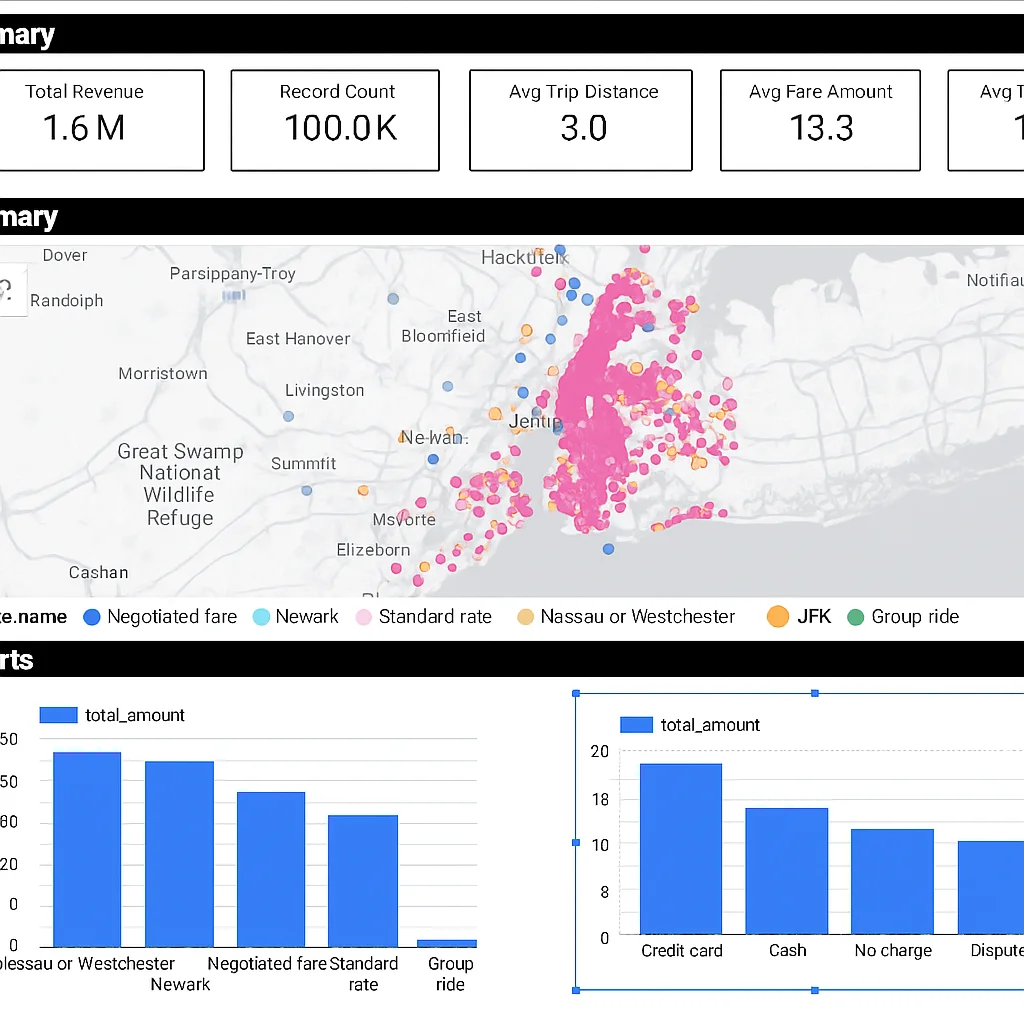
Batch ETL shows you yesterday; I wanted minutes. Ticks stream through Kafka
into object storage, Airflow loads the warehouse, dbt refines bronze into
silver into gold, and a dashboard renders it — 3k+ records/sec at 96%
pipeline reliability, sub-minute from market event to chart.
hover to inspect the dashboard up close
how it works
Medallion architecture: raw bronze, validated silver, business-ready gold
Warehouse cold-starts were tripping tight DAG timeouts; warmup queries stabilized runs at 96%
Kafka over Kinesis for cost, MinIO over S3 for local dev, dbt for tested, version-controlled SQL
requirements it meets
Functional: 1-minute polling across 100–600 tickers, 5 analytical views for strategy work
Non-functional: fault-tolerant messaging, 16x latency reduction over the batch baseline
SUB-MINUTE
EVENT → CHART — <60 S THROUGHPUT — 3K REC/S DAG RUNS — 24/25 GREEN
A classifier that can abstain. Monte-Carlo dropout estimates predictive
uncertainty, a tri-gate routes each image to accept, abstain, or flag, and
the out-of-distribution thresholds are calibrated against SVHN so confident
nonsense gets caught before it ships.
The actual retail game on Steam — not a clone. One button, one square,
instant death on contact: a perfect testbed for frame-perfect timing.
Agents train in a stripped-down physics simulator that runs 2,000×
faster than the game, then a custom C++ mod drives the real thing —
reading game state and pressing jump in real time.
how it works
Training in the live game means waiting days at 60 fps; the fast simulator turns millions of frames into seconds
A controlled bake-off: PPO — the trendy default — reliably got stuck, refusing the first risky jump because failing cost it reward; DQN and a genetic algorithm cleared every level
Sim-to-real transfer: a policy that had only ever seen the simulator drove the genuine game and jumped real spikes
results
A full official level cleared start to finish, learned from a human demonstration
Custom C++ mod bridges policy and game: state out, button press in, every frame
The lesson: the best algorithm depends on the problem, not the hype